
Work Shouldn’t Kill: Why Occupational Health & Safety Matters for Farmworkers

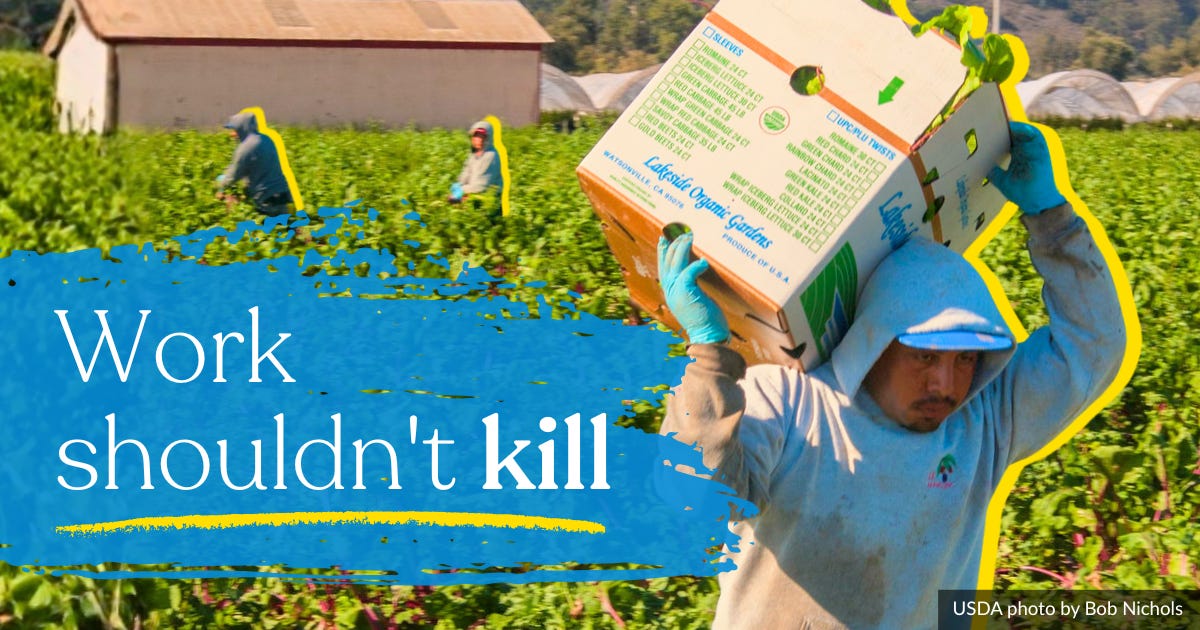
This week is National Occupational Health & Safety Week, a time to focus on preventing injury and illness at work. While last week we remembered those who lost their lives on the job, this week, we’re working to make sure it doesn’t continue. We are also running a limited fundraising effort in recognition of the importance of protecting workers, especially those facing the greatest risk. If you’d like to learn more or support this work, you can do so here.
National Occupational Health & Safety Week exists for a simple reason: most injuries and illnesses at work are preventable. Occupational health and safety is about building safer systems of work, not just asking individuals to be careful in dangerous conditions. At its best, worker health and safety is proactive: it asks what could go wrong, who is most exposed, and how risk can be prevented before injury or illness occurs.
But worker protections are not applied evenly.
In agriculture, the gap has a name: farmworker exceptionalism. In plain terms, it means that farm work has been excluded from many of the basic labor and safety protections that apply to most other types of jobs. Standards are often weaker, enforcement is uneven, and responsibility for safety is pushed down to workers who have the least power to change conditions.
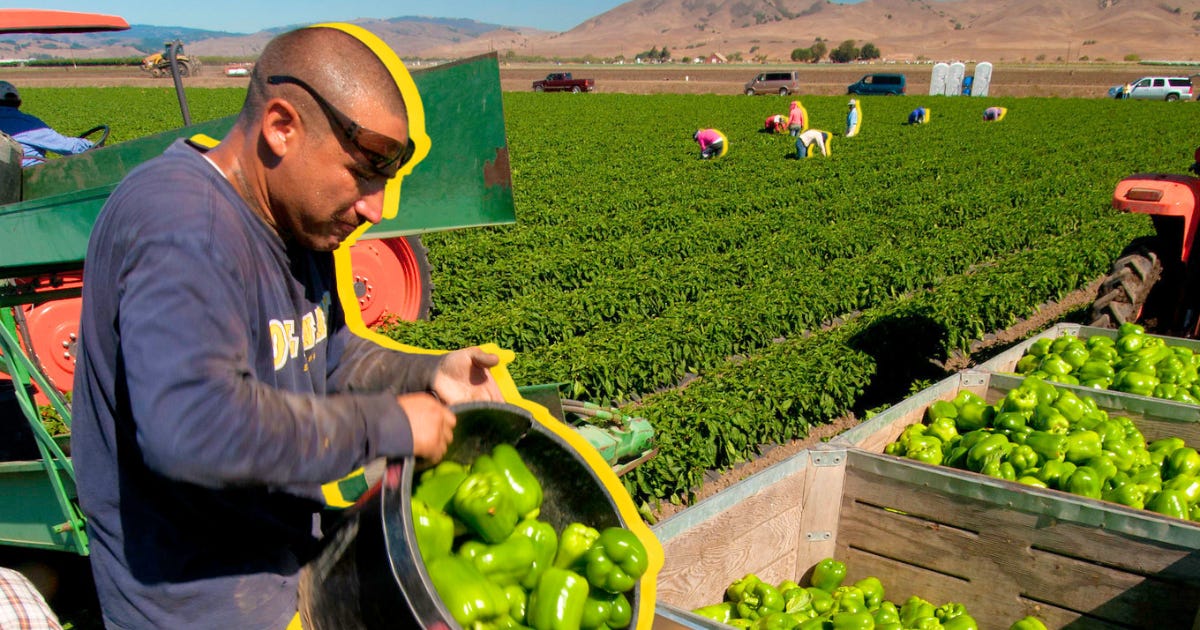
These exclusions are not accidental. They grew out of New Deal-era political compromises and systemic racism that deliberately left agricultural workers outside many foundational labor protections, largely to preserve the farm labor practices in the postbellum South, where plantations and other large farms continued to rely on exploitative labor practices. As a consequence, agricultural workers were left out of worker protections that we all take for granted, like overtime and the right to form a union. At the time, agriculture was framed as “different” or “family-based,” even as it relied on large-scale, hazardous labor performed disproportionately by Black, immigrant, and, later, migrant workers. While farming has since become more industrialized and technologically complex, the hired labor force remains largely Black and Brown and many of those early exclusions remain embedded in law and practice. The result is a modern food system where risk is treated as inherent to farm work, rather than as something that can—and should—be systematically reduced.
But the risks go beyond the lack of protection. Farmworkers’ risk of injury and illness is higher than the average worker, as they work in one of the most dangerous industries in the country. Farmworkers may be exposed to chemicals and pesticides without clear or accessible information about risks, safe reentry timing, symptoms, or protective measures. Exposure can cause sudden illness and long-term harm, including neurological effects and mental health impacts such as depression. Those working in dairy and livestock operations face ongoing risks from animal-borne diseases, including avian flu and other zoonotic infections.
Many agricultural tasks also involve confined spaces, such as grain silos, manure pits, and methane tanks, where workers face risks of drowning, suffocation, or exposure to poisonous gases, often without adequate information or safeguards. Farm work also routinely involves dangerous machinery that elsewhere is governed by strict safety standards. These dangers are compounded by weaker rules around overtime, pay and age limits, leaving workers vulnerable to exploitation.
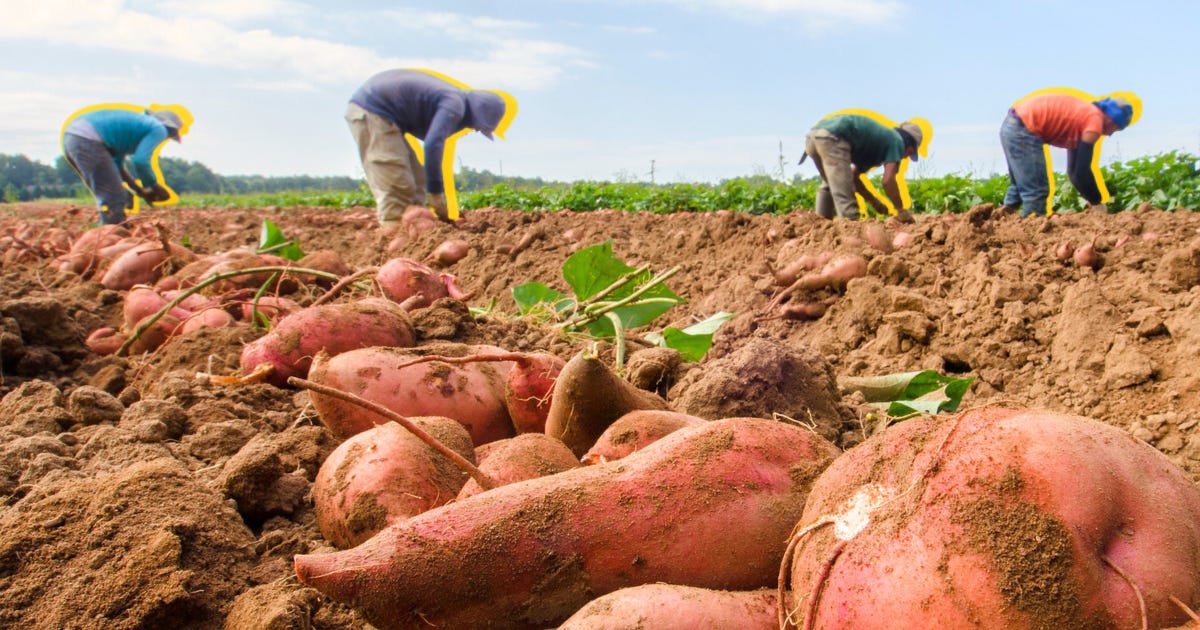
In addition, climate change is rapidly intensifying environmental hazards. Rising temperatures and more frequent heat waves make already demanding work far more hazardous; farmworkers are 35 times more likely to die from heat than other workers. Wildfire smoke, toxic air, flooding, and extreme weather increasingly force outdoor workers to continue laboring in conditions that would halt work in many other industries. The effects of climate change extend beyond the jobsite: farmworkers are more likely to live in substandard, overcrowded, or geographically vulnerable housing, including areas prone to flooding or extreme heat, leaving little opportunity for recovery after dangerous workdays. Taken together, the contrast becomes clear: farm work carries many of the same risks as other hazardous industries, but far fewer protections.
What’s more, immigrant farmworkers face draconian immigration policies that further their vulnerabilities. Workers may feel unsafe speaking up about dangerous conditions or declining dangerous tasks because they fear job loss, retaliation, detention or deportation.
That gap between risk and protection is not inevitable—and it’s where clinicians and public health can make a difference.
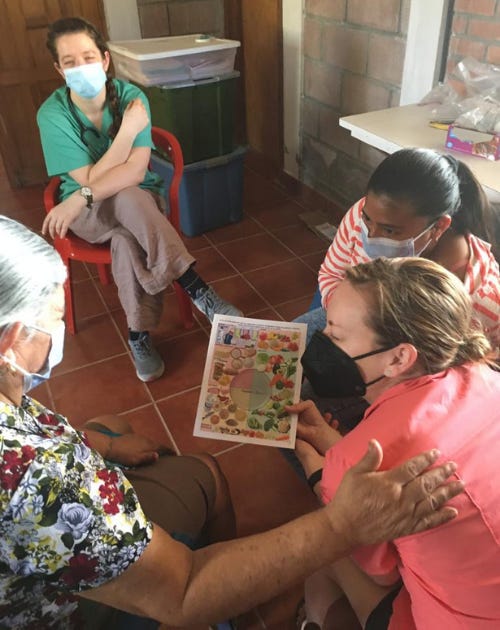
Protecting farmworkers’ health depends in large part on whether clinicians have the right information, tools, and resources at the moment they are needed.
“Migrant Clinicians Network is at the forefront of migrant and immigrant worker health and safety,” said Amy K. Liebman, MPA, MA, Chief Program Officer for Migrant Clinicians Network. “Our work makes meaningful progress to equip clinicians and, ultimately, the workers who are at risk, with the tools and education to stay safe on the job.”
Migrant Clinicians Network’s occupational health and safety work is designed to support clinicians who serve migrant and immigrant farmworkers—so they can recognize risks, provide relevant guidance, and help workers protect themselves and their families.
That support takes many forms. MCN develops and delivers training through webinars and curricula that translate occupational health research into clinical practice. These important educational opportunities bring training, connection, and support to clinicians to the entire care team in English and Spanish. We create low-literacy, bilingual comic books and other worker-centered materials that make complex safety information understandable and usable in real life. We produce clinician guides that address common exposures and hazards, and we gather and amplify resources from trusted partners so clinicians don’t have to start from scratch.
MCN also engages in advocacy and policy work, particularly around the EPA’s Worker Protection Standard, to help ensure that protections are not only written into regulations but understood and implemented in ways that actually reduce harm. Together, this work helps clinicians move beyond treating injuries and illness after the fact—and toward prevention that reaches workers before harm occurs.
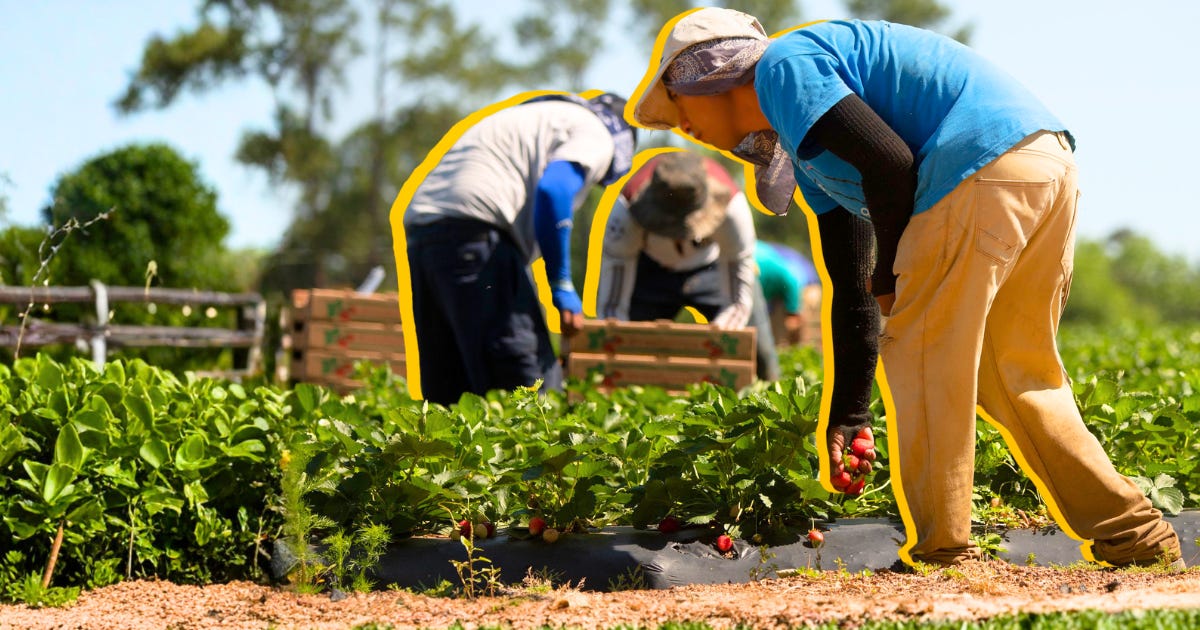
At its core, occupational health and safety is about equity and dignity at work. No one should have to accept serious risk as the price of earning a living, and no job should be treated as expendable because of who does it. Yet farmworkers—many of them migrant and immigrant workers—continue to be afforded few protections than other workers. Addressing those gaps is essential to building a food system that truly values the people who sustain it.
MCN’s message for National Occupational Health & Safety Week is simple and enduring: work shouldn’t kill. Prevention is possible when risks are taken seriously, information is accessible, and protections reach the people who need them most. MCN’s occupational health and safety team exists to support that vision—by equipping clinicians, sharing practical resources, and strengthening systems that reduce harm before it occurs.
That work is made possible by people who believe safety at work should be a given, not a privilege. If you’d like to support MCN’s efforts in recognition of National Occupational Health & Safety Week, you can learn more here: www.migrantclinician.org/donate.
However you engage, thank you for standing for a world where dignity, health, and safety are part of every job.
Resources
Blog Posts
Webinars
The role of community health workers in preventing heat-related illness
El papel de los promotores de salud en la prevención de enfermedades causadas por el calor
Worker Protection Standard Pesticide Safety Training Curriculum and Resources
Comic Books
Clinician Guides
Wildfire Smoke as an Occupational Risk Factor: Clinician’s Guide
Heat-Related Illness: Clinician’s Guide and Guía del proveedor de servicios de salud para enfermedades relacionadas con el calor
Clinician Guides for Farmworker Health and Safety Regulations